
How AI-Powered Triage Can Reduce Wait Times in Emergency Departments
Updated: Feb 20
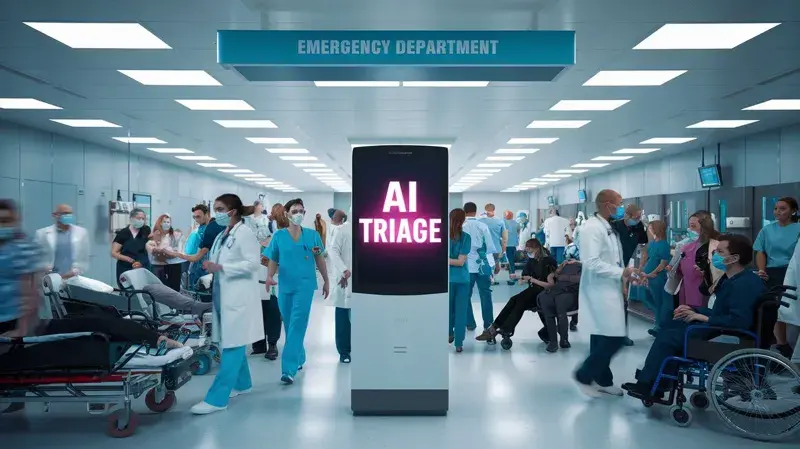
Emergency Departments (EDs) are the front door to acute care — but long wait times have become a persistent burden. With rising patient volumes, staffing shortages, and unpredictable acuity, traditional triage systems struggle to scale.
AI-powered triage is rapidly emerging as a transformative solution that not only prioritizes patients more accurately but drives operational efficiency and measurable reductions in wait times.
The Challenge: Emergency Department and the System Under Strain
⚡Over 1.5 million patients waited more than 12 hours in large U.S. emergency rooms in 2023.
⚡Delays in care have been associated with approximately 268 additional deaths per week linked to overcrowding and extended wait times.
Traditional triage relies heavily on human assessment under pressure — introducing variability, delays, and risk of overtriage or undertriage.
Even small inefficiencies at intake cascade into; longer door-to-provider times, increased left-without-being-seen (LWBS) rates, reduced patient satisfaction and clinical outcomes. This is where AI-powered triage changes the equation.
What Is AI-Powered Triage?
AI-powered triage uses machine learning and predictive analytics to evaluate patient urgency, risk factors, and resource needs in real time.
Unlike traditional triage scoring systems, AI models analyze multiple data streams simultaneously:
Vital signs
Symptom descriptions
Medical history
Demographics
EHR data
Free-text clinical notes via NLP
These systems provide decision support rather than replacing clinicians — enhancing speed and consistency.
Research shows AI triage models can achieve prediction accuracy ranging from 80.5% to 99.1%, demonstrating strong clinical decision support potential.
How AI Triage Reduces Emergency Department Wait Times?
1. Faster Initial Assessment
AI accelerates the intake phase by automating data analysis and acuity scoring. Instead of relying solely on manual assessment:
Patients can be pre-assessed through digital intake or automated symptom analysis.
High-risk patients are flagged instantly.
Operational impact:
Reduced triage processing time
Earlier clinical intervention for critical cases
Studies show AI-driven triage can reduce ED length of stay by about 15 minutes per patient, improving overall throughput.
2. Improved Patient Prioritization
One of the biggest drivers of long wait times is misclassification of patient urgency. AI systems:
Identify subtle risk patterns humans may miss
Reduce overtriage (resource waste)
Reduce undertriage (safety risk)
Machine learning models often outperform traditional scoring systems in predicting outcomes and patient acuity. Result:
Critical patients are seen sooner
Non-urgent cases are routed efficiently
Clinical workflows become more predictable
3. Predictive Flow Management
Advanced AI triage tools integrate forecasting and operational analytics. They can:
Predict incoming patient volume
Identify upcoming bottlenecks
Recommend staffing or resource adjustments
Hospitals using AI triage and scheduling have reported:
Up to 30% reductions in wait times
Significant improvements in door-to-provider metrics
This shift moves emergency departments from reactive management to proactive optimization.
4. Reducing Administrative Burden
Documentation and intake processes consume valuable clinician time. AI-assisted workflows:
Automate note generation
Pre-fill clinical data fields
Streamline triage documentation
Some implementations have shown:
Up to 20% reduction in administrative workload, freeing clinicians to focus on patient care.
Conclusion
Reducing ED wait times is a strategic priority — for patient outcomes, clinician wellbeing, and operational performance. AI-powered triage bridges the gap between overwhelming demand and constrained resources.
By enabling faster risk assessment, smarter prioritization, and predictive insight into flow dynamics, AI doesn’t just improve triage — it accelerates care delivery and reshapes the emergency care experience.
For healthcare leaders aiming to modernize their ED, AI triage is not an experiment — it is a performance imperative.
👉Ready to transform your triage workflows and reduce emergency department bottlenecks? Click here.

